Tissue Structure
Conducting System
Components of the Cardiac Conduction System
Purkinje Fibres
The Purkinje fibres (sub-endocardial plexus of conduction cells) are a network of specialised cells. They are abundant with glycogen and have extensive gap junctions.
These cells are located in the subendocardial surface of the ventricular walls, and are able to rapidly transmit cardiac action potentials from the atrioventricular bundle to the myocardium of the ventricles.
This rapid conduction allows coordinated ventricular contraction (ventricular systole) and blood is moved from the right and left ventricles to the pulmonary artery and aorta respectively.
Clinical Relevance: Artificial Pacemaker
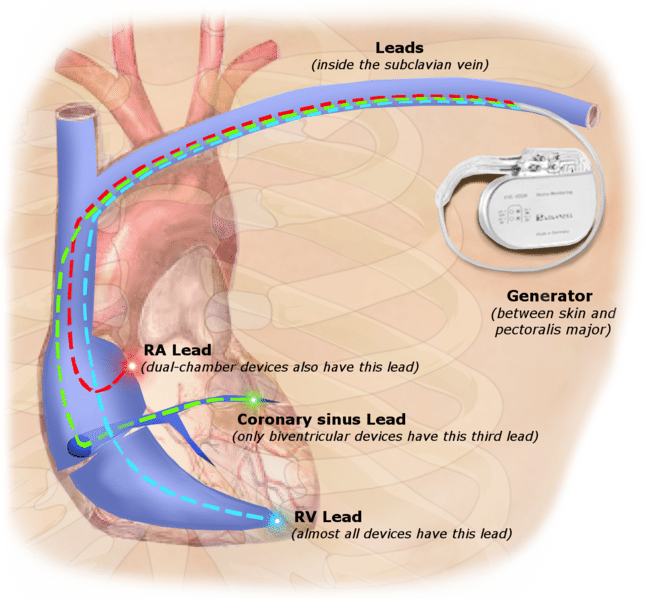
An artificial pacemaker is a small electrical device commonly fitted to monitor and correct heart rate and rhythm. It is inserted into the chest under the left clavicle, with wires connected to the heart via the venous system.
The most common indication for a pacemaker is bradycardia. Once inserted, the pacemaker monitors the heart rate, and only fires if the rate becomes too slow. Pacemakers can also be used to treat some tachycardias, certain types of heart block and other rhythm abnormalities.